6 minute read

August 1, 2025
Abstract
The noticeable existence of kayayei women in urban Ghana is tied to many factors and reflects a delicate place in society. This paper explores the intersection of these issues and how they work together to challenge the generally negative established narrative around kayayei work and the greater role of the informal market in Ghanaian society. Through academic and personal resources, this research serves as a vehicle to acknowledge the independence of these women while at the same time contending with the fact that kayayei work has a stigma around it. Given the limited academic research around the topic, furthermore, kayayei workers are oftentimes portrayed to be at the bottom of the totem pole in the Ghanaian social order. This paper reflects a meaningful exploration of the external and internal factors that work with and against the head porters. Looking to the future, a more realistic (and less negative) outlook on the industry gives agency to the women and reflects a more balanced perspective.
Introduction
Head portering is an ancient practice in Sub-Saharan Africa that has evolved with changing times. Today, it exists as a sector of the informal market in Ghana, dominated by young and old women. In many urban areas across Ghana, particularly in Accra and Kumasi, exists a unique presence of kayayei women balancing large loads on their heads while navigating the busy streets and markets of urban Ghana. Ranging in age from teenagehood to late fifties, the women of kayayei continue to exist and cement their place in Ghanaian society. Kayayei are defined as people who transport goods on their heads in return for a small fee or a minimal fixed amount. In the context of this paper, kayayei will be focused on the female role in the industry, and will be synonymous with female head porter. This is important to note as there are men who partake in the industry as well. In many cases, male kayayei utilize the streets as an extension of their shops located close by, and do more than just head portering. Conversely, female kayayei work and make a living solely on the streets where they can be subjected to violence, poverty, and lack of healthcare.
Social and Political Forces
The lived experiences of kayayei is largely shaped by the political and social factors at play across Accra and Kumasi, across Ghana, and across the world. These women work at the intersection of gendered disadvantages, regional inequalities, and lack of political representation. As previously elaborated upon, kayayei women are classified to be excluded from many aspects of society based on their backgrounds, the majority of them are migrants from the north where there are disproportionately less resources available, and while there are some efforts to better their circumstances, there is still a lot of work to be done in terms of the scope and impact of these projects.

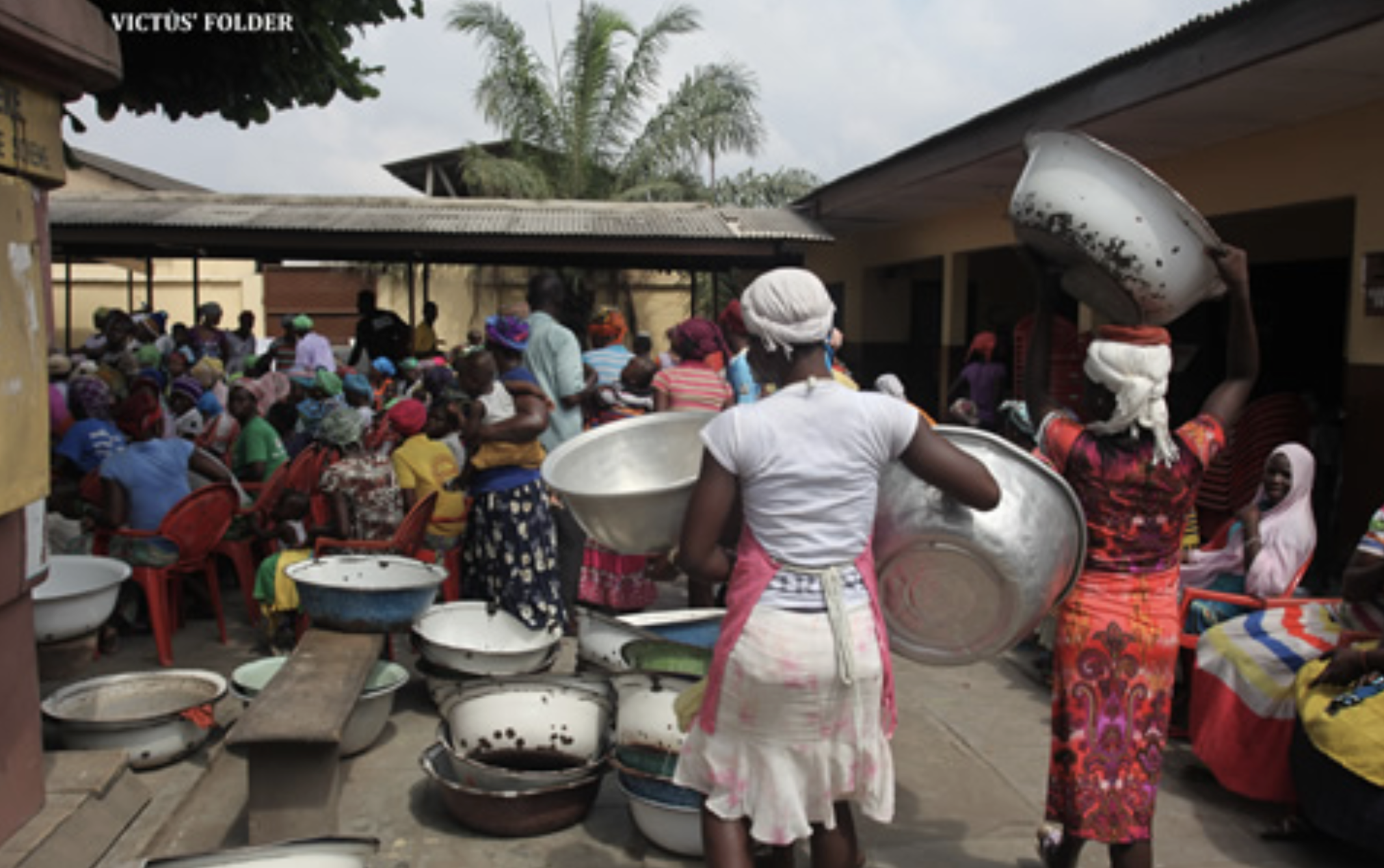
Image from Article Websit Depicting Group of Kayayei Women
Thus, the narrative is once again complicated when a combination of successful and unsuccessful attempts for change intersect. The growing attention to the kayayei profession furthermore reflects a complex and evolving relationship between the consensus perception on the livelihood of kayayei women and the influence it yields over available aid resources. While these efforts of the Old Fadama Kayayei Association and the IMF accomplished their goals, they had shortcomings in many senses. Most notably, their small scale impact. On an individual level, the women involved in these programs see an improvement in their life however, it does not address the estimated 100,000 women who are vulnerable to hardship.
Also to be considered is the migration pattern of kayayei. Accra and Kumasi are viewed as ideal migration locations for those looking for a better life. Relocating to a new region puts kayayei at a disadvantage being that oddly enough, they are strangers in their own country. The vast ways in which the north of Ghana and the south differ makes moving a significant endeavor. Moreover, “Half of the urban population, more than one-quarter of the total national population, is concentrated in the capital, Accra (4.5 million inhabitants), and Kumasi (2.8 million inhabitants)”.
Upon arrival in urban areas, kayayei are confronted by limited healthcare options that in a lot of ways, mirror the conditions of northern and rural zones. Per the National Library of Medicine, “Rural-to-urban migrant women working in the informal sector, such as Ghana’s head porters (kayayei), experience exclusion from the health system, risk of being uninsured, and poor health outcomes.” In addition to the challenges associated with moving across a country, establishing a new living for yourself, leaving, and leaving family behind, physical and mental wellbeing becomes a concern.
Agency and Resistance
An oftentimes underrepresented narrative is the fact that these women overcome so many hurdles to be head porters in major cities. As noted in GeoJournal, “Many of these girls are young Muslim migrants from the poorer regions of Northern Ghana, who migrate to escape poverty at home or save money for dowry, but are very vulnerable in their new environment…Up to date research on young females’ migration for head portering in Ghana is largely skewed towards negative circumstances that confront them in their destinations, creating a gap in knowledge of the role that their livelihood portfolios may contribute positively to their standard of living and that of their kins up north” (293-294). To that end, kayayei is often compared to the formal economy of the wealthiest cities (namely Accra and Kumasi). As a consequence, it goes unnoticed that compared to much poorer conditions in northern areas, kayayei is a chance at a better life; it presents young women with the opportunity to take control of their situations and make a living for themselves. By seeing the worst in kayayei, largely due to misrepresentation by media and aid groups, it opens the door for them to become marginalized and underrepresented.

Image from theghanareport.com
Available academia and research on kayayei indicates an especially negative outlook on the field. A majority of sources reflect on the challenges that stand in the way of the women as opposed to concentrating on how liberating the industry can be for these people. As a result of the one-sided narrative presented, aid organizations and local efforts begin to believe that these women are in desperate need of their assistance and aid. While resources are always appreciated, it is essential to acknowledge how successful kayayei have been to establish the community and network of workers as they have.
This attitude is beginning to evolve, and the framework for aid is beginning to transform as more research and primary sources are taken into account when considering the conditions and quality of life for the women. By incorporating first hand experiences of kayayei women, social and political factors, and instances of agency and resistance, this paper makes it apparent that the premise of kayayei as a profession reflects a paradoxical tension between autonomy and agency for the women, and harmful societal and political pressures put upon them.

Leave a Reply