Image From: Wondermind
9 minute read
July 25, 2025
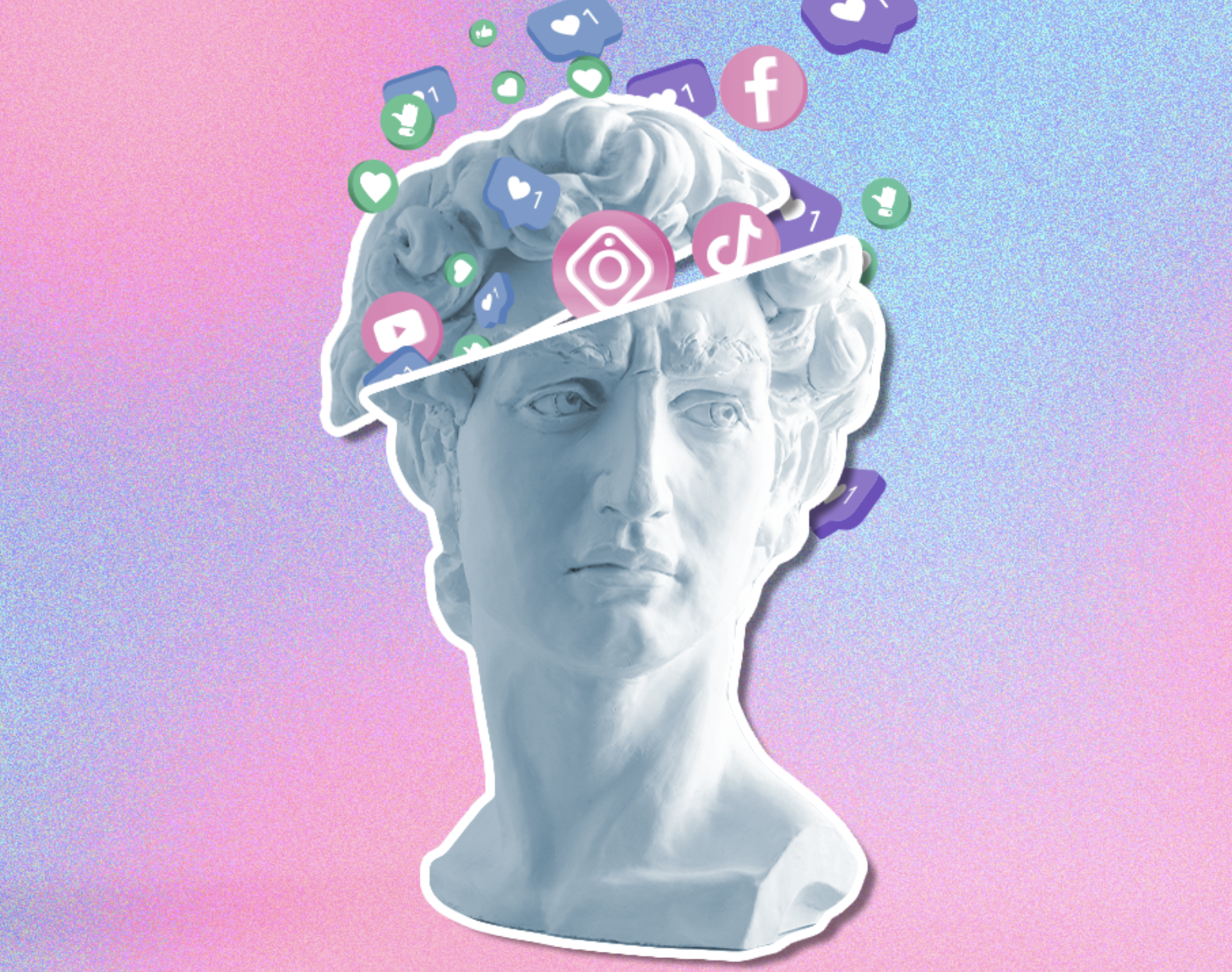
In a world where we are constantly logged in, Black girls are uniquely affected by the scroll. From Instagram, Snapchat, X (Twitter), and TikTok, social media can feel like both a sanctuary and a trap. It offers validation, inspiration, comfort, visibility, awareness, and understanding, while also triggering insecurity, comparison, and emotional exhaustion. While these platforms claim to connect us, they often leave us questioning our worth, beauty, and even our mental health. This article dives into how social media is shaping the emotional lives of Black girls—and how we can reclaim the feed to create a more inclusive domain while staying online.
The Scroll Trap: How Social Media Hooks Our Attention
Social media isn’t just something we use—it’s designed to use us. Algorithms across many social media platforms are curated to keep us scrolling endlessly, which often results in a lack of sleep, shortens our attention spans, and serves as a distraction. Black girls often juggle this with school, identity pressures, and family responsibilities, making this already difficult reality even harder to maneuver.
According to Psychologist Nir Eyal, social media companies use the Hooked Model, a theory that explains four stages of user interaction with a habit-forming product. As you search the web, you receive a Trigger to persuade you to use the product, an Action to satisfy the trigger, a Variable Reward for that action, and create an Investment that increases the value of the product to you.
The trigger is the spark that encourages you into the application, such as a phone notification, intriguing photo, website link, or email. As you receive more of these, you will form an association with an emotion or behavior, known as an “internal trigger”. When social media companies build strong digital habitats, they are the most successful, as you’ll enter their applications based on internal triggers. For example, a feeling of boredom may cause you to open YouTube to stimulate that trigger.
The action is the simplest behavior a user can do; it is the first initial scroll or video that you watch with the hopes of obtaining a variable reward.
As you scroll or continue to watch a video, there will be some content that is not relevant to you, but you may come across a video of someone who is showing their “OOTD” or a makeup tutorial. This feeling of expecting a reward keeps our dopamine levels high, so you will always be subconsciously scrolling through a mix of content, waiting to find the next engaging video.
To ensure that you will keep returning to the app, they are encouraged to make a small investment. Many apps/creators encourage you to share the video, like, subscribe, invite friends, leave feedback, turn on post notifications, etc, to keep you engaged. Once you begin to use these apps more, the apps will soon learn your interests and what you enjoy watching.


Comparison Culture: The Pressure to Be Perfect Online and The Implementation of The “Vanilla Girl” Aesthetic
The pressure to present ourselves as flawless has heightened over the past few years. From highlight reels to daily “get ready with me” videos, perfection seems to be the standard. For Black girls, the pressure is amplified when there is a need to represent harmful stereotypes and still be “aesthetically pleasing.” This constant comparison can lead to anxiety, self-doubt, and impostor syndrome—even when many videos and photos are filtered and edited.
On TikTok, a popular trend that began in 2023, known as the “Vanilla Girl Aesthetic,” still has a profound impact on girls today. The hashtags “#vanillagirl” and “#vanillagirlaesthetic” have amassed millions of views over the years, with the hopes of being a seemingly effortless trend to follow. It consists of minimal makeup, including a swipe of mascara, a dot of concealer, a slick of blush, fluffed-up brows, and almost always, straight blonde hair. This look earned its name because of its simple, relatively niche, and preppy style.
At a glance, this trend seems harmless, which it is to some degree. On the other hand, it opens the door to a narrow, exclusionary standard of femininity—one that subtly reinforces Eurocentric beauty ideals and sidelines women of color, particularly Black and Brown girls, who rarely see themselves reflected in the aesthetic. Vanilla girl beauty seems to be exclusive to those with lighter complexions, especially as it encourages baby pink blush and light colored bronzer, which can be faint on deeper skin tones. The difference between this beauty trend and others, such as the “Clean Girl” aesthetic (even though it upholds a similar standard), is that the word “vanilla” is linked to a specific color scheme and, when it comes to beauty, a certain skin tone. Similar to how deeper skin tones are periodically referred to as “chocolate”, “caramel”, “toffee”, or “cinnamon”, lighter skin tones are often referred to as “vanilla.”
This movement echoes unrealistic beauty standards. Just like the vanilla girl, the clean-girl look consists of close to perfect skin, minimal makeup, simple clothing, and encourages a seemingly perfect life that most people can’t obtain. It is no wonder that those with varying skin types, like acne-prone skin, hyperpigmentation, scarring, dry, and oily skin, feel excluded by this trend.
To take an even closer look, the word “clean” suggests that anything that doesn’t fit into this aesthetic is “dirty”, which is extremely offensive and derogatory. The NHS reports that around 95% of people aged 11 to 30 are affected by acne to some extent, and this condition is caused by a variety of factors. Not only are these trends targeting a change in physical appearance, but they also promote complete lifestyle changes, which are unrealistic. On an even deeper note, tying back to the heart of this article, these trends heighten and contribute to the mental health epidemic that Black girls, girls of all types, are grappling with.
Likes vs. Self-Love: When Validation Becomes a Burden
Likes, comments, and shares tend to become a value of self-love when immersed in the social media experience. One day you’re viral, the next, you are invisible. This makes it even harder for Black Girls who are already underrepresented in mainstream media, as validation online can make self-love harder to hold onto.
There have been many cases in which Black girls spend time picking an outfit, doing their hair just right, and using the right caption, only for the post to get barely any attention in comparison to others who are not Black. It can often cause girls to question: Was I not pretty enough? Did I not look happy enough? Should I have straightened my hair instead?
Digital Beauty Standards: Where Do Black Girls Fit In?
From filters that lighten skin to algorithms that favor Eurocentric features, Black girls often don’t see themselves reflected online. This creates a distorted sense of beauty that can harm self-esteem and reinforce harmful beauty norms.
A 2024 experiment by authors Piera Riccio, Julien Colin, Shurley Ogolla, and Nuria Oliver supported the idea that beautifying features can have negative effects. Piera Riccio, the lead researcher, along with others, wrote in their journal article, Mirror, Mirror on the Wall, Who Is the Whitest of All? Racial Biases in Social Media Beauty Filters, “The beautified faces are more likely to be classified as White than the originals. As a consequence, the performance of both fairface and deepface decreases after beautification for all races except for the White race, where it increases. For example, before beautification, only 8.2% or 19.2% of the Latino Hispanic individuals were classified as White by fairface and deepface, respectively. After beautification, these figures increase to 34.1% (4.15x) and 35.0% (1.8x).”
This experiment reveals that when different ethnic groups use beautifying filters, the Fairface and Deepface applications, which allow for authenticity and differentiation to decrease through the technology, pose a closer replica of Caucasian characteristics. The modification process diminishes and changes the features of those who use filters to mirror European characteristics, which, in reference to Black girls, is completely destructive to the growth of their self-image.
Mental Health in the Dark: Why We’re Not Talking About It Enough
Black girls have been taught to be strong. However, that doesn’t always mean we’re unbreakable. It doesn’t mean ignoring anxiety, masking depression, or laughing through pain. Mental health is still taboo in a lot of Black communities, and too many Black girls suffer in silence.
Some sources have stated that Black communities view seeking mental health care as a weakness. Others suggest that the root of mental health stigma among Black people can be traced back to slavery. At the time, it was commonly thought that enslaved people were not sophisticated enough to develop depression, anxiety, or other mental health disorders.
Reclaiming The Feed: How to Make Social Media Healthy for Us
We can make social media a more positive and affirming place. This happens by unfollowing creators and accounts that you don’t believe are beneficial to your journey. This happens by setting screen-time limits. Continue to make your page a reflection of who you are, not what others want you to be. Your mental health matters more than a post ever will.
Offline Reflections
Social media will always be a part of our lives, whether we like it or not. With that being said, we must create an environment that caters to people of all types. For Black girls specifically, social media has turned out to be such a toxic place full of hateful and harmful comments, which have only made matters worse. Fortunately, it is not too late to flip the script, and hopefully, this article inspired you to reclaim your feed and, on a larger scale, de-stigmatize mental health with Black youth.
So now, let’s scroll with intention, care, and confidence—because who we are offline is what truly matters the most.

Leave a Reply