7 minute read
July 14, 2025
Recently, I’ve kept up with the immensely popular show, Love Island USA, and, as a self-described ‘seasoned fan’, I am no stranger to the humid temperatures, vibrant walls, and chaotic emotional tensions of the renowned Fijian villa.
I wanted to introduce myself through one of the most impactful experiences that I face daily as a Black girl, while also speaking on behalf of all those who also watch Love Island, as we all know the trials and tribulations of the Villa have occupied a significant portion of our conscious minds. Take a look at some of these trials and tribulations through my eyes.
The Unfortunately Typical Experience of a Black Girl on Love Island UK
As a Black seasoned fan, and as someone who’s also watched multiple seasons of both Love Island UK and Love Island USA, this season (Season 7) of Love Island USA has provided me with a distinct feeling of both relief and reassurance, as we’re finally witnessing the Black female Islanders being desired and in stable relationships with the male Islanders on the show.


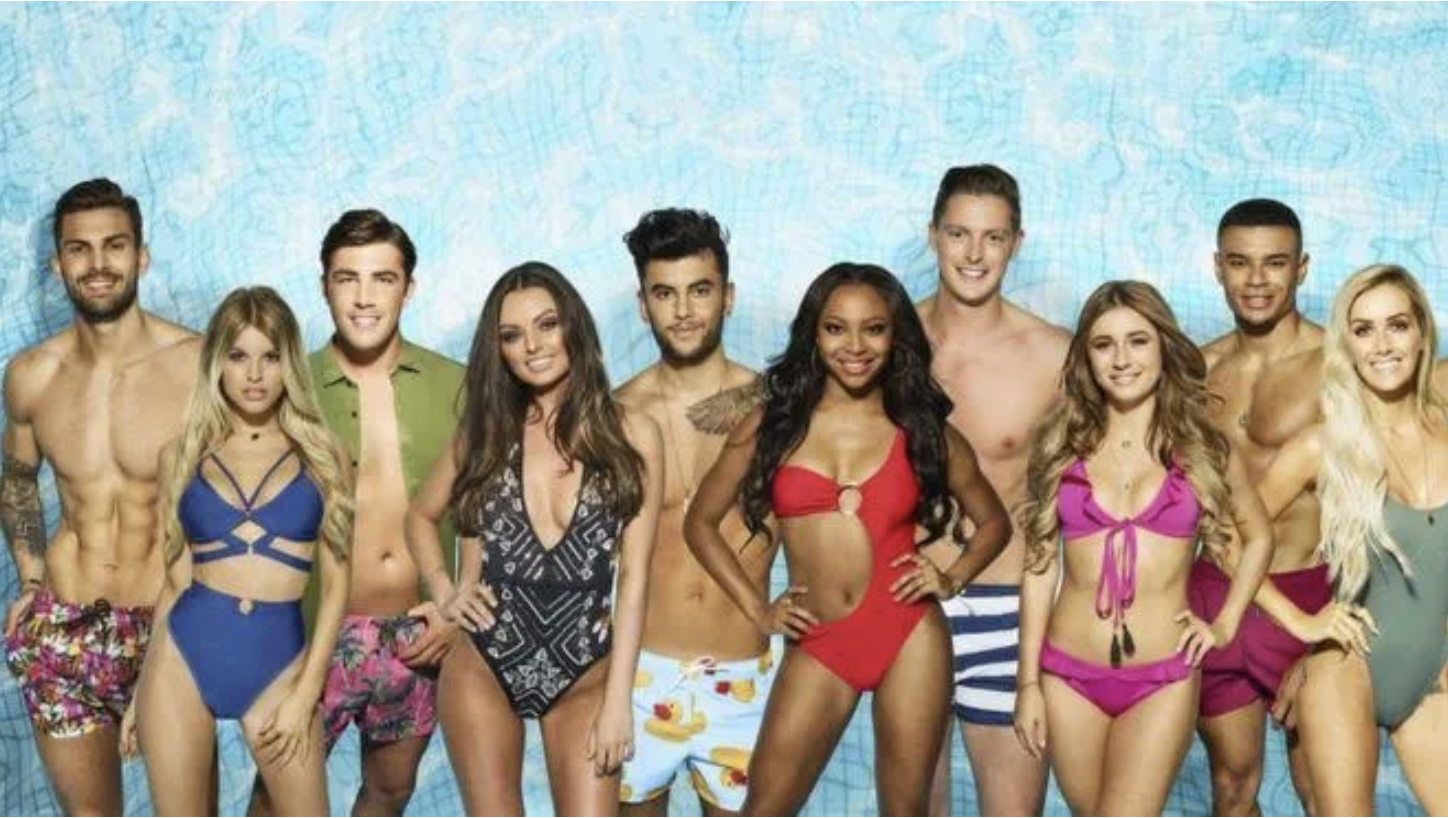
Images From: Variety & People Magazine
In the past, especially when I’ve watched Love Island UK, I’ve always felt an underlying, yet constantly recurring feeling of angst each time a beautiful, darker-skinned Black girl would get cast on the show. It would almost feel as though I was watching a highly dramatized and emotionally dysregulated version of my own so-called “romantic life”. This black girl’s experience would either go extremely well or simply serve as just another reminder of the sinister way that racism, colorism, and misogynoir seep into the romantic life of almost every Black woman living in a Western-dominated society.
Numerous fans and past contestants of the show have found this situation present within the experiences of multiple Black female contestants, in which they’ve been repeatedly overlooked and made to feel as though they were not truly valued as a contestant, but rather as a box checked for diversity.
“’I was obviously the token [black woman] on the show, it was easy to work that out. I only had to look at the line of girls when I arrived at the villa,” Love Island UK contestant Samira Mighty told Daily Mail reporters in 2019, a year following her 2018 appearance on the 6th season of the show.
Samira then goes on to describe the experience of Yewande Biala, the Love Island UK contestant who appeared on Season 5 of the show back in 2019,
“’Love Island is so shallow. It’s about first impressions. A lot of boys have their type and they’re open about it. It’s a shame Yewande is left on the shelf because it seems right now she isn’t anyone’s type’, …‘It got to me after a while,’ ‘One day I had a wobble, and so I went to a producer because I thought maybe I was a bit different, and the boys just wanted to go for their type. When you kept seeing the white, blonde bombshells coming in with these amazing bodies, big boobs, you feel like ‘Oh God, another one. I’m at the back of the queue again’”.
The Shattering Truth About Many People’s Romantic “Preferences”
My take is that the reality TV world hasn’t fully witnessed the impact of producers mainly casting male contestants who have a distinct, and often similar, “type” in women. A so-called “preference”, that, instead of existing in alignment with the Merriam Webster example of, “Some people like vanilla ice cream, but I prefer chocolate”, they only like chocolate, and will ignore and disrespect all other ice cream flavors that don’t align with their particular liking.
These preferences are, more often than not, overwhelmingly racial. And while I understand individuals finding greater similarity with or even a stronger cultural connection with those of whom they share ethnicity or racial identity, the issue becomes present when these preferences are justified by racist ideologies about those of whom they don’t prefer. The issue grows even more predominant when these specific preferences, fueled by racist ideologies, are upheld by those whose racial identities are exactly identical to the race that they don’t prefer.
Love Island UK contestant Samira Mighty emphasizes this issue, and the importance of shying away from these confining “preferences” on the reality show in her interview with Daily Mail, ‘The producers should work more on the compatibility of the contestants beforehand. They need to have a mix of people in the villa who like everyone, and who will give everyone a chance.’”
A Look Into My Experience
For further understanding, let’s think back to my own experience in 9th grade. I attend a school that is seemingly pretty diverse, in ethnicity and in mindset –or at least I initially thought it was. On a broader scale, it is. Especially due to the fact that it’s located in the 4th most liberal city in the country. However, if you’re Black like me, –and specifically, a darker skinned Black girl like me, you know that the Black community’s application of our own liberal, anti-racist, and anti-colorist ideologies isn’t always universal, and most importantly, doesn’t always reflect the vision that Malcolm X had aspired for us.
While there are many Black students in my grade, there are only a handful of students who are of a darker complexion. Because of this, and because of the Black community’s persisting struggle to develop a predominant and universal anti-colorist mindset, especially in California, I’d often witness other dark-skinned students, including myself, become the ‘butt’ of numerous insensitive jokes.
For example, I recall at least three times overhearing or being told directly by a popular Black boy in my grade some sort of unfunny joke or phrase regarding my dark skin complexion.
I remember sitting on the quad at school with a lighter-skinned friend, and overhearing a group of Black boys rating the attractiveness of the girls in our grade, and when my looks were eventually proposed, someone thought it’d be funny to shout, “Zenze’s dark as f*ck!!” I also recall my friends and I having a brief conversation with another popular Black boy, and him arbitrarily saying to me, “You dark as hell!”, and proceeding to laugh at his own joke as I walked away.
These are only a fraction of the experiences I’ve had with colorism and anti-blackness. However, just two can account for the reason why I feel such angst for the darker skinned Black girls that are cast on Love Island, as I know that the prospect of any male contestant wanting a relationship with them, or simply even finding them attractive, could be automatically diminished because of these same (racist) “preferences” or perceptions regarding our physical appearance.
The Importance of Recognizing this Experience
Let me be frank: My reasoning in writing this isn’t to draw further division between darker-skinned Black women and Black men, or to contribute to the notion that men don’t like darker-skinned Black women. Rather, it is to refocus our attention on why these generalizing notions may have arisen in the first place. Bringing light to my experience of racial trauma, one that’s likely identical to thousands of other Black women throughout the country, can establish an understanding of the beliefs, feelings of angst, and actions of all darker-skinned Black women who act in response to this trauma.
However, anti-blackness and preferences justified by racism exist within the mindsets of both Black men and Black women. So, combating hate with hate, racism with racism, or colorism with colorism, isn’t the way to bring an end to this type of discrimination in romance, which is, more often than not, faced by women. Recognizing the experiences of Black women on Love Island and outside of television can expand the conversation beyond just those who’ve lived it, likely fostering an environment of empathy and solidarity among those who choose to engage. Hopefully, it could even establish a rise in unapologetic anti-racist, anti-colorist, and pro-Black ideologies within the Black community and beyond.

Leave a Reply